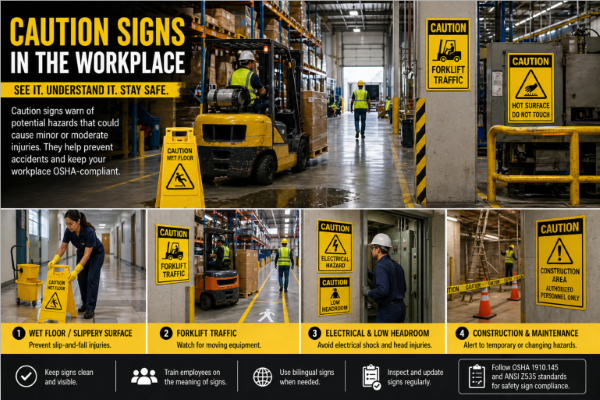
Imagine walking into a warehouse with heavy machinery operating, slick floors, and no signs to warn you of potential dangers.
It’s a recipe for accidents. Caution signs in the workplace are more than just legal obligations — they’re visual alerts that help save lives, reduce injuries, and ensure compliance with OSHA regulations.
In this guide, we’ll break down what caution signs actually mean, the standards behind them, the most common types, and where they must be placed to keep your work environment safe and compliant.
What Are Caution Signs?
Caution signs are visual safety alerts used to warn individuals of potential hazards or unsafe practices that may cause minor or moderate injuries. These signs usually:
- Have a yellow background
- Feature a black border and text
- Include clear symbols for quick recognition
They are governed by OSHA (Occupational Safety and Health Administration) and ANSI Z535 standards, which set guidelines for design, color, text, and placement.
The Meaning Behind Caution Signs
Caution signs specifically indicate potential hazards that are not immediately life-threatening, but still pose risk. For instance:
| Sign | Meaning |
|---|---|
| Caution: Wet Floor | Slip hazard; area recently mopped or wet |
| Caution: Hot Surface | Surface may cause burns |
| Caution: Forklift Traffic | Forklifts operate in the area |
| Caution: Low Headroom | Risk of head injury |
| Caution: Electrical Hazard | Non-lethal electric shock potential |
Types of Caution Signs and Their Use Cases
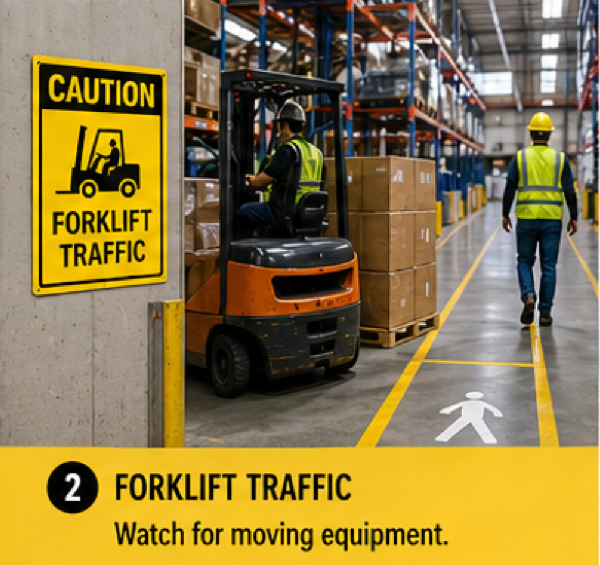
Here are the most common caution signs used across various industries:
1. Wet Floor / Slippery Surface
- Where: Restrooms, kitchens, lobbies, warehouses
- Why: Prevents slip-and-fall accidents, especially during cleaning or rainy weather
2. Hot Surface
- Where: Manufacturing plants, food prep areas, laboratories
- Why: Alerts workers to heated machinery or surfaces
3. Forklift Traffic
- Where: Warehouses, shipping docks, manufacturing floors
- Why: Warns of moving vehicles that can cause injury if unseen
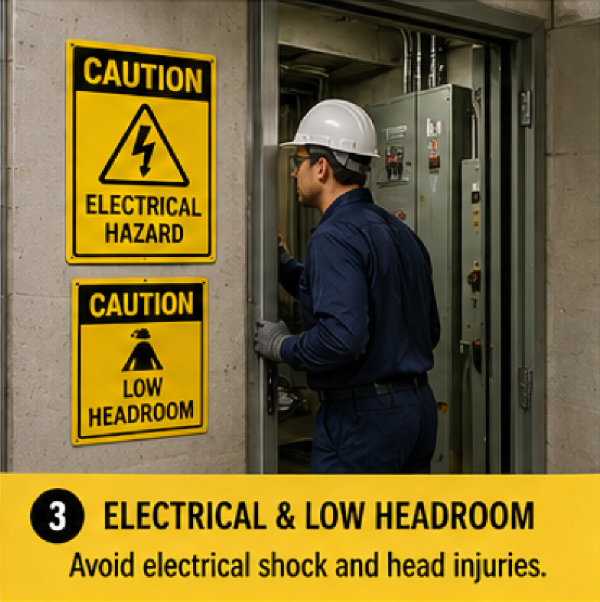
4. Electrical Hazard (Non-lethal)
- Where: Near switchboards, maintenance rooms, machinery
- Why: Protects workers from accidental contact with powered equipment
5. Low Headroom
- Where: Basements, storage spaces, mechanical rooms
- Why: Reduces risk of head trauma from low ceilings or hanging obstacles
Where You Need Caution Signs (Placement Guide)
Strategic placement is key for effectiveness. Here are areas where caution signs are legally and practically essential:
✅ Entrances to Hazardous Zones
Make sure signs are highly visible at entrances to areas like boiler rooms, electrical closets, or loading docks.
✅ Near Machinery or Equipment
Install signs where workers operate or approach machinery with moving parts or hot surfaces.
✅ On Slippery Surfaces
Place “Wet Floor” signs immediately after cleaning, or in areas where water or oil frequently accumulates.
✅ Loading Zones and Traffic Areas
Use “Forklift Traffic” signs to avoid collisions and improve pedestrian awareness.
✅ Construction and Maintenance Sites
Caution signs should be used around temporary hazards such as ladders, scaffolding, or exposed wiring.
Compliance and Safety Standards
OSHA and ANSI provide guidance for safety sign compliance:
🔹 OSHA 1910.145
- Defines types of signs (Danger, Caution, Safety Instruction)
- Caution signs must signal minor or moderate injuries
🔹 ANSI Z535.2
- Standardizes sign layout (signal word, safety alert symbol, message panel)
- Ensures clarity and consistency in signage
Failing to follow these standards can result in fines, lawsuits, or serious injury. Regular audits are recommended to maintain compliance.
Safety Tips for Effective Caution Sign Usage
- Keep signs clean and legible – Dirty or faded signs are often ignored
- Use bilingual signs – Especially in multilingual workplaces
- Train employees – Ensure everyone understands the meaning and importance of caution signage
- Review and update regularly – Add or reposition signs as workplace hazards change
- Use floor decals or wall-mounted signs – Depending on space and visibility
Caution vs. Danger vs. Warning: What’s the Difference?
Understanding sign hierarchy is critical:
| Signal Word | Color | Hazard Severity | Example |
|---|---|---|---|
| Danger | Red/White | Immediate threat, severe | High Voltage, Biohazard |
| Warning | Orange/Black | Serious but not fatal | Flammable Materials |
| Caution | Yellow/Black | Minor or moderate injury | Wet Floor, Forklift Traffic |
Visual Comparison Chart of Common Caution Signs
Here’s a quick reference chart to help visualize common workplace caution signs and their meanings:
| Caution Sign | Visual Symbol | Where Used | Prevented Hazard |
|---|---|---|---|
| Wet Floor | Slip symbol | Bathrooms, entryways | Slip-and-fall injuries |
| Hot Surface | Hand over heat lines | Manufacturing lines, kitchens | Burns |
| Forklift Traffic | Forklift icon | Warehouses | Collision with moving equipment |
| Electrical Hazard | Lightning bolt | Electrical rooms | Minor electrical shock |
| Low Headroom | Head hitting surface | Utility corridors, crawlspaces | Head trauma |
Conclusion: Stay Alert, Stay Safe
Caution signs are more than just regulatory requirements — they’re lifesavers. By clearly communicating risks, these signs help prevent injuries, improve safety culture, and ensure your workplace remains OSHA-compliant.
If you’re managing a facility or workspace, take a fresh look at your signage. Are your caution signs up-to-date, clearly visible, and properly placed? If not, now’s the time to act.
Safety starts with awareness — and awareness starts with a sign.
Where to Buy or Download Safety Signs and Posters
If you’re ready to upgrade or restock your caution signage, here are trusted resources to explore:
| Resource | Type | Website |
|---|---|---|
| Amazon Safety Signs | Wide selection of caution signs for all industries | Shop on Amazon |
| MySafetySign | Custom and standard OSHA/ANSI signs | mysafetysign.com |
| SafetySign.com | Industrial-grade caution and hazard signage | safetysign.com |
| OSHA Poster Downloads | Free compliance posters (English & Spanish) | osha.gov/publications/poster |
| Compliance Posters of America | Labor law posters, safety signs, and more | compliancepostersofamerica.com |
Whether you’re looking for downloadable OSHA posters or durable signs for long-term industrial use, these sources offer options to meet your compliance and safety goals.