Identifying and Controlling Respiratory Risks
By the Century Safety Products Team | Updated April 15, 2026
In many industrial settings, the most dangerous thing in the room is the one thing you can’t see: the air. Airborne hazards are frequently overlooked because they don’t always have a smell, a color, or an immediate “sting.” However, breathing in contaminated air is a slow-motion risk that can lead to chronic illness, reduced lung capacity, and long-term disability.
Whether you’re managing a high-scale manufacturing floor or a small woodworking shop, understanding these invisible threats is the first step toward OSHA compliance and—more importantly—keeping your team healthy.
For a complete overview of how these hazards fit into a broader protection strategy, see Respiratory & Air Safety in the Workplace: Risks, Protection, and Best Practices.
What Exactly Are Airborne Hazards?

Airborne hazards are harmful substances—particles, gases, or vapors—that become suspended in the air and enter the body through inhalation. Because these particles are often microscopic, they can stay airborne for hours, especially in areas with poor ventilation.
Exposure typically happens during routine tasks like:
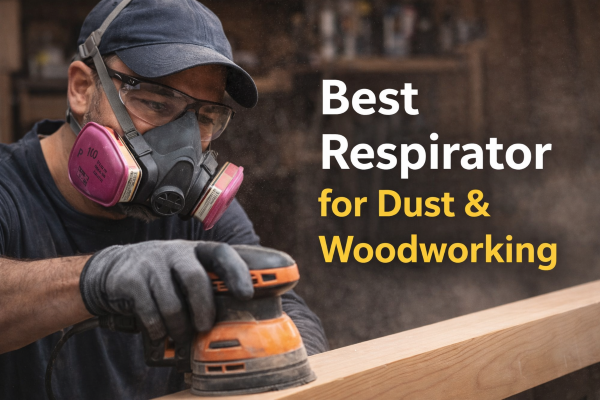
- Grinding, sanding, or cutting materials.
- Welding or soldering.
- Handling industrial solvents and cleaning agents.
Pro Tip: If your workers are coughing by the end of the shift, your “natural ventilation” (i.e., opening a door) isn’t working. It’s time to evaluate your safety controls.
For a deeper dive into how these risks fit into a total safety plan, check out our guide on [Respiratory & Air Safety in the Workplace: Risks, Protection, and Best Practices].
1. Dust and Particulate Matter
Dust is the “everywhere” hazard. While some dust is just a nuisance, industrial dust can be deadly.
- Sources: Concrete drilling, wood sanding, mining, and masonry.
- The Risk: Fine particles (like Crystalline Silica) can penetrate deep into the alveolar sacs of the lungs. Once there, they cause permanent scarring (fibrosis) or even lung cancer.
- Safety Note: Asbestos and silica remain the highest-tier risks in construction and renovation.
2. Welding Fumes and Metalwork
When metal is heated above its boiling point, it creates a cloud of microscopic metal particles known as fumes.
- Sources: Arc welding, brazing, and thermal cutting.
- The Risk: Inhaling these can cause “Metal Fume Fever” (flu-like symptoms) in the short term, and neurological or kidney damage in the long term.
- Key Concern: Stainless steel welding releases Hexavalent Chromium, a known carcinogen that requires strict respiratory oversight.
3. Chemical Vapors and Gases
Unlike dust, vapors are the “gas phase” of substances that are usually liquid at room temperature.
- Sources: Paint thinners, degreasers, fuels, and industrial coatings.
- The Risk: Many vapors act as central nervous system depressants, causing dizziness or “worker’s fog.” Others, like Carbon Monoxide (CO), are odorless killers that displace oxygen in the blood.
4. Biological Airborne Hazards
Often forgotten in industrial guides, biological contaminants are a major risk in specific sectors.
- Sources: Agriculture (grain dust), healthcare (viruses), and water-damaged buildings (mold spores).
- The Risk: These can trigger severe allergic reactions, asthma, or infectious diseases that can sweep through a workforce.
5. Smoke and Combustion Byproducts
Smoke isn’t just “dirty air”—it’s a complex cocktail of carbon, ash, and toxic gases.
- Sources: Fuel-powered forklifts, furnaces, or accidental overheating of machinery.
- The Risk: Prolonged exposure to combustion byproducts can lead to cardiovascular disease and chronic obstructive pulmonary disease (COPD).
Why These Hazards Are So Easy to Miss
The “Invisible Threat” factor is real. Unlike a trip hazard you can see on the floor, respiratory damage is cumulative. Workers often rely on the “Scent Test”—assuming that if they can’t smell a chemical, it isn’t there.
This is a dangerous myth. Many toxic gases are completely odorless. By the time a worker feels dizzy or short of breath, their exposure levels may already be in the danger zone.
Take Action: Match the Protection to the Hazard
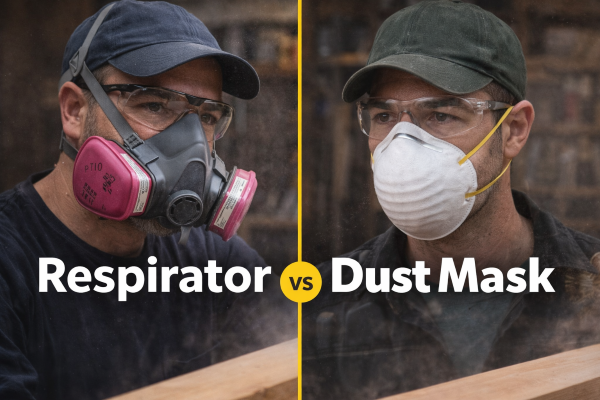
Identifying the hazard is only half the battle. You must then select the correct barrier. A standard “dust mask” will do nothing against chemical vapors or welding fumes.
- For Dust/Fibers: Use an N95 or P100 particulate respirator.
- For Vapors/Gases: You need a respirator with specific activated charcoal cartridges.
- For Oxygen Deficiency: Only a supplied-air system will suffice.
Learn how to choose the right gear in our breakdown of [Types of Respirators and When to Use Them].
Featured Safety Gear
[Century Safety Recommended: Half-Face Multi-Purpose Respirator]
- Best for: Spray painting, woodworking, and welding.
- Includes: Clear eye goggles and 10 replacement filters.
- Price: $24.99 (Amazon)
Keywords for SEO: Airborne hazards, workplace safety, respiratory protection, silica dust, welding fumes, chemical vapors, industrial air quality, OSHA compliance, P100 filters, N95 respirators, occupational health, metal fume fever,
How often does your team conduct air quality assessments on your high-risk job sites?