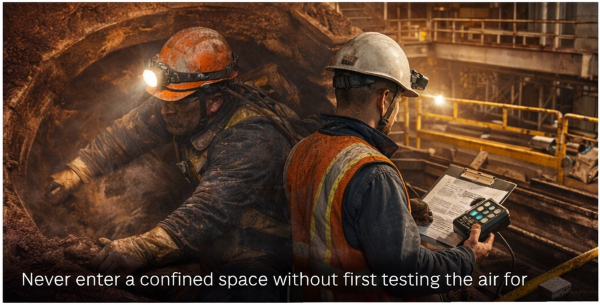
Never Enter a Confined Space Without This
Confined spaces don’t look dangerous at first.
That’s what makes them deadly.
Every year, workers are seriously injured or killed in confined spaces not because the job was complex, but because one critical step was skipped before entry ever happened.
If you take only one thing away from this page, let it be this:
Never enter a confined space without testing the air first.
Why Confined Spaces Are So Dangerous
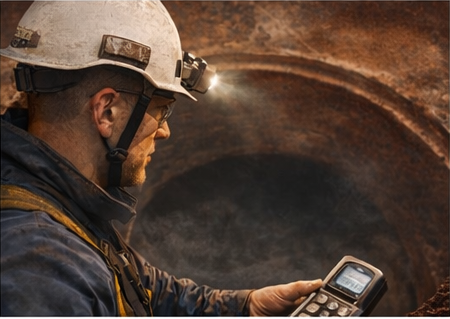
A confined space is any area that:
- Has limited openings for entry or exit
- Is not designed for continuous occupancy
- Can trap hazardous atmospheres
Examples include:
- Manholes
- Tanks
- Pits
- Vaults
- Silos
- Tunnels
The danger isn’t always visible.
Most confined space fatalities happen because of atmospheric hazards, not physical ones.
Low oxygen.
Toxic gases.
Flammable vapors.
And the worst part?
Bad air doesn’t warn you.
The One Thing You Must Do Before Entry
Before anyone enters a confined space, the air must be tested.
Not guessed.
Not assumed.
Not checked “last time.”
Tested.
Air testing tells you:
- Oxygen levels
- Presence of toxic gases
- Flammable or explosive atmospheres
Conditions can change in minutes.
What was safe earlier may be deadly now.
This is why air testing must happen before entry and continuously during work.
What OSHA Requires (In Plain English)
OSHA requires employers to identify confined spaces and evaluate the hazards before entry.
That includes:
- Testing the atmosphere
- Ventilating the space if needed
- Using proper monitoring equipment
- Following permit-required confined space procedures when applicable
You don’t need to memorize regulations to understand the intent.
The goal is simple:
Make sure the air won’t kill someone before they step inside.
Why Ventilation Alone Is Not Enough
Ventilation helps, but it is not a substitute for air testing.
Ventilation without testing assumes:
- Air is moving where you think it is
- Contaminants are actually being removed
- Oxygen levels are safe
Those assumptions have cost lives.
Air testing confirms reality.
Common Confined Space Mistakes That Turn Fatal
These mistakes show up again and again in incident reports:
- Entering without testing because “it’s just a quick job”
- Trusting how the space smelled or looked
- Testing once, then never rechecking
- Using the wrong gas monitor
- Ignoring alarms or abnormal readings
Confined space incidents often happen during routine work, not emergencies.
Complacency is the real hazard.
What Workers and Crews Should Do Every Time
Before entering a confined space:
- Identify whether the space qualifies as confined
- Test the air with a calibrated gas monitor
- Verify oxygen, toxic gas, and flammable gas levels
- Ventilate if required
- Continue monitoring during entry
If the air is unsafe, do not enter.
No task is worth a life.
Recommended Safety Equipment
Proper confined space entry often includes:
- Multi-gas detectors
- Ventilation equipment
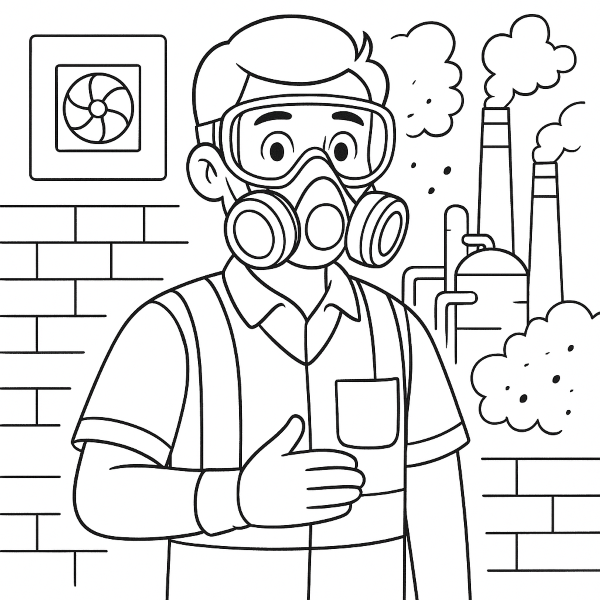
- Respiratory protection
- PPE suited for the specific hazards
The right equipment only works when it’s used correctly and consistently.
Final Word
Confined spaces don’t forgive shortcuts.
Most tragedies could have been prevented with one step done at the right time.
Never enter a confined space without testing the air first.
That single action saves lives.