The 7 Classes of Forklifts: Which One Do You Need to Operate?
Not all forklifts are created equal. In fact, OSHA separates powered industrial trucks into seven distinct classes based on their fuel type, tire design, and intended use. If you are getting certified, it is critical to know which class you are operating, as training on a warehouse lift does not legally qualify you to operate a construction-site telehandler.
Before you dive into the technical details, make sure you’ve studied the basics in our 2026 Forklift Certification Practice Test.
The OSHA Forklift Classification Guide
Class I: Electric Motor Rider Trucks
These are common in indoor warehouses where air quality is a priority. Since they run on batteries, they produce zero emissions. They come in three-wheel and four-wheel models and are typically used for moving pallets from loading docks to storage.
Class II: Electric Motor Narrow Aisle Trucks
Designed for maximum space efficiency, these include Reach Trucks and Order Pickers. They allow companies to narrow their warehouse aisles to fit more inventory. These require specialized training because the steering often feels “backward” compared to a standard car.
Class III: Electric Motor Hand Trucks
Often called “Electric Pallet Jacks” or “Walkies.” While they don’t look like a traditional forklift, they are still OSHA-regulated. Operators either walk behind them or stand on a small platform.
Class IV & V: Internal Combustion (IC) Trucks
These are the workhorses of the industry, powered by Gasoline, Diesel, or Propane (LPG).
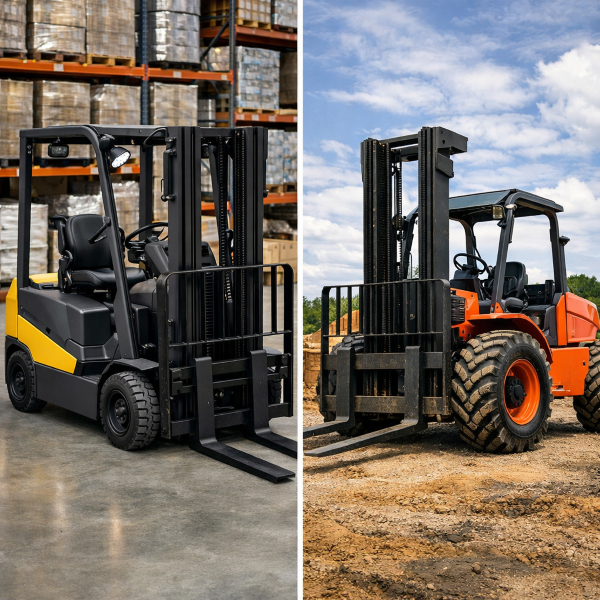
• Class IV: Features “Cushion” tires (solid rubber) for indoor use on smooth floors.
• Class V: Features “Pneumatic” tires (air-filled) for outdoor use on gravel or uneven surfaces.
Class VI: Electric and IC Motor Tractors
These are used for pulling (towing) loads rather than lifting them. You’ll often see these at airports moving luggage carts or in large manufacturing plants.
Class VII: Rough Terrain Forklift Trucks
These are massive machines used almost exclusively on construction sites and lumber yards. They have large, tractor-like tires and are designed to navigate deep mud and hills. This class often includes “Telehandlers” with extendable booms.
Why Does the Class Matter?
OSHA regulation 1910.178 states that an operator must be trained specifically on the type of equipment they will be using. If you move from a sit-down Class I lift to a stand-up Class II Reach Truck, your employer must provide additional training because the controls and stability factors are completely different.
Safety Tip: Regardless of the class, always wear high-visibility gear. Check out our latest High Visibility & Vests recommendations to stay seen on the jobsite.
Summary of Forklift Types
| Class | Power Source | Common Environment |
|---|---|---|
| Class I-III | Electric | Indoor Warehouses |
| Class IV-V | Gas / Propane | Loading Docks & Yards |
| Class VII | Diesel | Construction Sites |
Choosing the right forklift starts with understanding the job environment. For more help with workplace safety compliance, visit our Start Here page.