Work Boot Maintenance Guide: How to Make Your Safety Boots Last Longer
Your work boots are among your most important pieces of PPE — they protect your feet from hazards, keep you stable on rough terrain, and need to last through tough conditions. But only if you take care of them. Here’s a practical guide to work boot maintenance that will extend their lifespan and keep your feet safe and comfortable.
Why Work Boot Maintenance Matters
Your work boots are one of the most important pieces of personal protective equipment you own. Whether you wear steel toe boots on construction sites, waterproof boots in outdoor jobs, or slip-resistant footwear in warehouses, proper maintenance helps them last longer and perform better.
Neglecting boot care can lead to:
- cracked leather
- worn-out soles
- reduced slip resistance
- foot discomfort
- expensive replacements
A simple maintenance routine keeps your boots safer, cleaner, and more comfortable.
Daily Care and Cleaning
Your boots take a beating every day, collecting dirt, dust, and moisture. A little daily maintenance goes a long way.
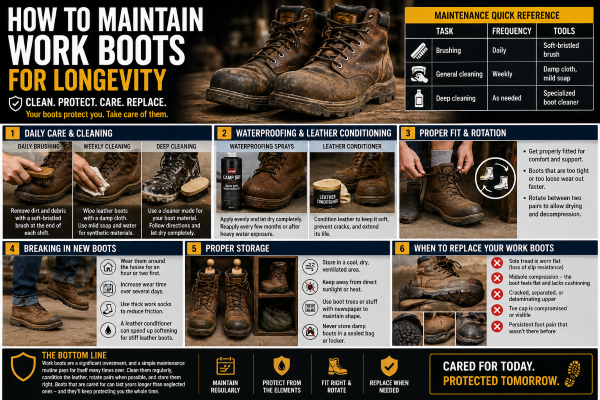
Daily Brushing
Use a soft-bristled brush to knock off surface dirt and debris at the end of each shift. This prevents grime from grinding into the material and breaking it down over time.
Weekly Cleaning
Once a week, wipe leather boots with a damp cloth to remove stubborn stains. For synthetic materials, mild soap and water work well. Always dry thoroughly — trapped moisture leads to mold, odor, and material breakdown.
Deep Cleaning
When boots get heavily soiled, use a cleaner made specifically for the boot material (leather cleaner vs. synthetic cleaner). Test on a small area first, follow manufacturer directions, and let them dry fully before wearing.
| Task | Frequency | Tools |
|---|---|---|
| Brushing | Daily | Soft-bristled brush |
| General cleaning | Weekly | Damp cloth, mild soap |
| Deep cleaning | As needed | Specialized boot cleaner |
Waterproofing and Leather Conditioning
Protecting boots from the elements is essential — especially in wet or muddy work environments.
Waterproofing Sprays
Products like Kiwi Camp Dry keep moisture out and protect the boot material. Apply evenly and let dry completely. Reapply every few months or after heavy water exposure.
Leather Conditioner
Leather needs conditioning to stay soft and crack-resistant. After cleaning, work a quality leather conditioner in with a soft cloth and let it absorb fully. Conditioning also restores the leather’s appearance and extends its life significantly.
Proper Fit and Rotation
Even perfect maintenance can’t compensate for a poor fit. Boots that are too tight or too loose wear unevenly and can cause foot injuries. Get properly fitted for your work boots — width, arch support, and toe box room all matter.
If you wear boots daily, consider rotating between two pairs. This gives each pair time to dry and decompress fully between wearings, which significantly extends the life of both.
Breaking In New Boots
Never wear brand-new boots on a full shift immediately. Break them in gradually:
- Wear them around the house for an hour or two first
- Increase wear time over several days
- Use thick work socks to reduce friction during break-in
- A leather conditioner can speed up softening for stiff leather boots
Proper Storage
Store boots in a cool, dry, ventilated area — away from direct sunlight or heat sources, which dry out leather and degrade synthetic materials. Use boot trees or stuff them with newspaper to help them hold their shape. Never store damp boots in a sealed bag or locker.
When to Replace Your Work Boots
Even well-maintained boots eventually wear out. Replace them when you notice:
- Sole tread is worn flat (loss of slip resistance)
- Midsole compression — the boot feels flat and lacks cushioning
- Cracked, separated, or delaminating upper
- Toe cap is compromised or visible
- Persistent foot pain that wasn’t there before
The Bottom Line
Work boots are a significant investment, and a simple maintenance routine pays for itself many times over. Clean them regularly, condition the leather, rotate pairs when possible, and store them right. Boots that are cared for can last years longer than neglected ones — and they’ll keep protecting you the whole time.