The #1 Ladder Safety Mistake Workers Make
(And How to Prevent Falls)
Ladder accidents happen fast. One second you’re climbing. The next second you’re on the ground.
And here’s the scary part: most ladder injuries don’t happen because workers are careless. They happen because of one “small” mistake people make all the time — and it feels normal until it doesn’t.
In this post, I’m going to break down the #1 ladder safety mistake workers make, why it causes so many falls, and exactly what to do instead (step-by-step). If you work construction, roofing, maintenance, warehouses, or home repair, this one could honestly save a life.
If you’re building an OSHA-compliant workplace safety program, start with this guide too.
Key Takeaway
The #1 ladder safety mistake is losing 3 points of contact. Always climb with two hands and one foot, or two feet and one hand—never carry tools in your hands.
The #1 Ladder Safety Mistake Workers Make
✅ The #1 mistake:
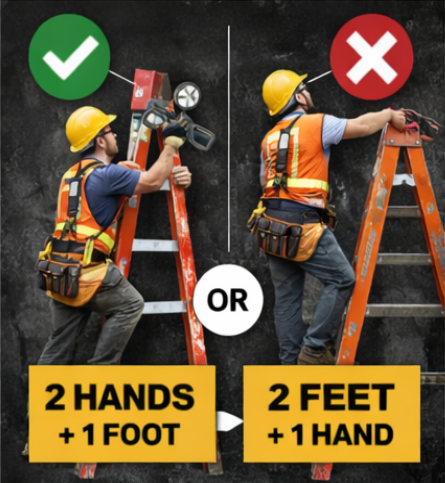
Not maintaining 3 points of contact while climbing (or working from the ladder).
This is the biggest ladder safety mistake because it happens constantly:
- carrying tools in your hands
- holding a phone
- reaching to the side
- climbing too fast
- turning sideways
- stepping off while holding something
When you lose 3 points of contact, your ladder becomes unstable and your body becomes the counterweight. That’s when the ladder can shift, slide, or tip — and the fall happens before you even realize it.
Falls don’t give warnings—here’s a quick fall protection awareness guide every crew should review.
What Does “3 Points of Contact” Mean?
3 points of contact means you should always have:
✅ two hands + one foot
or
✅ two feet + one hand
at all times while climbing or descending.
That means:
- You should NOT climb while holding tools.
- You should NOT reach too far while standing on a ladder.
- You should NOT “hug the ladder” with one hand while doing work with the other.
- You should NOT climb down while distracted.
Why This Mistake Causes So Many Falls
When you don’t maintain 3 points of contact, you increase your fall risk because:
1) Your center of gravity shifts
A ladder is stable only when your weight is centered.
The moment you lean, twist, or reach, you pull the ladder’s balance point.
2) Your grip strength isn’t enough
Even if you’re strong, once you slip, your body weight is too heavy to recover.
3) You can’t react fast enough
A ladder slip happens in a blink. Most falls are over before your brain even registers danger.
OSHA Ladder Safety Basics (What Every Worker Should Know)
OSHA ladder safety rules emphasize correct climbing and ladder use. Even if you’re not quoting the standards word for word, these basics will keep you compliant and safe:
✅ use the correct ladder type and rating
✅ inspect ladder before use
✅ set ladder at correct angle
✅ secure base and top
✅ keep 3 points of contact
✅ never overreach
✅ keep ladder stable and dry
✅ use fall protection when required
For a full breakdown of OSHA compliance, violations, and common fines, see our complete OSHA safety guide.
Ladder Safety Checklist: Before You Climb
Here’s a simple ladder safety checklist you can use on every job.
✅ Ladder Inspection Checklist
Before using any ladder, check:
- rails not bent or cracked
- rungs not loose, oily, or broken
- feet/grip pads intact
- locks and braces work properly
- ladder is clean and dry
- rating is correct for the worker + tools
✅ Ladder Setup Checklist
Before climbing:
- ladder is on stable ground
- base is not on slippery debris
- ladder is not placed in front of a door unless blocked
- correct angle used (4:1 rule)
- top is secured if possible
- area below is clear
The 4:1 Rule (Simple Ladder Angle Safety Tip)
A lot of ladder falls happen because the ladder angle is wrong.
The 4:1 ladder rule:
For every 4 feet of height, the ladder base should be 1 foot out from the wall.
Example:
- ladder reaches 8 feet high → base 2 feet out
- ladder reaches 12 feet high → base 3 feet out
This prevents ladders from sliding backward or tipping.
The Best Way to Prevent the #1 Ladder Mistake
If you want to prevent ladder falls on the jobsite, focus on these 3 things:
✅ 1) Use a tool belt or tool lanyard
If your hands are holding tools, your hands are NOT holding the ladder.
A tool belt solves the biggest reason workers lose 3 points of contact.
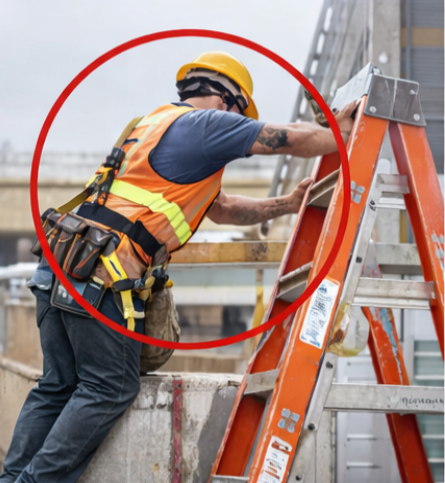
✅ 2) Keep your belt buckle between the rails
This is a simple rule safety pros teach:
If your belt buckle goes past the side rail, you’re overreaching.
Overreaching is one of the fastest ways to tip a ladder.
✅ 3) Reposition the ladder instead of leaning
Workers lean because moving the ladder feels annoying.
But here’s the truth:
Moving the ladder takes 10 seconds. A fall changes everything.
Common Ladder Safety Mistakes (Quick List)
Besides the #1 mistake, these are the most common ladder safety mistakes workers make:
- stepping on the top rung
- using the wrong ladder height
- climbing while distracted
- placing ladder on unstable objects
- placing ladder on wet/greasy floors
- using damaged ladders
- not locking extension ladders properly
- wearing slippery footwear
- working too close to power lines
Ladder Safety Tips for Workers (Simple but Effective)
Here are the best ladder safety tips I recommend:
✅ climb slowly
✅ face the ladder
✅ keep your weight centered
✅ keep shoes clean and dry
✅ keep ladder area clear
✅ don’t rush
✅ never “jump down”
✅ don’t use ladders in high wind
✅ do not use a ladder like a scaffold
Best Safety Gear for Ladder Work (Recommended)
If you do ladder work frequently, these items help prevent falls and injuries:
- non-slip work boots
- tool belt / tool pouch
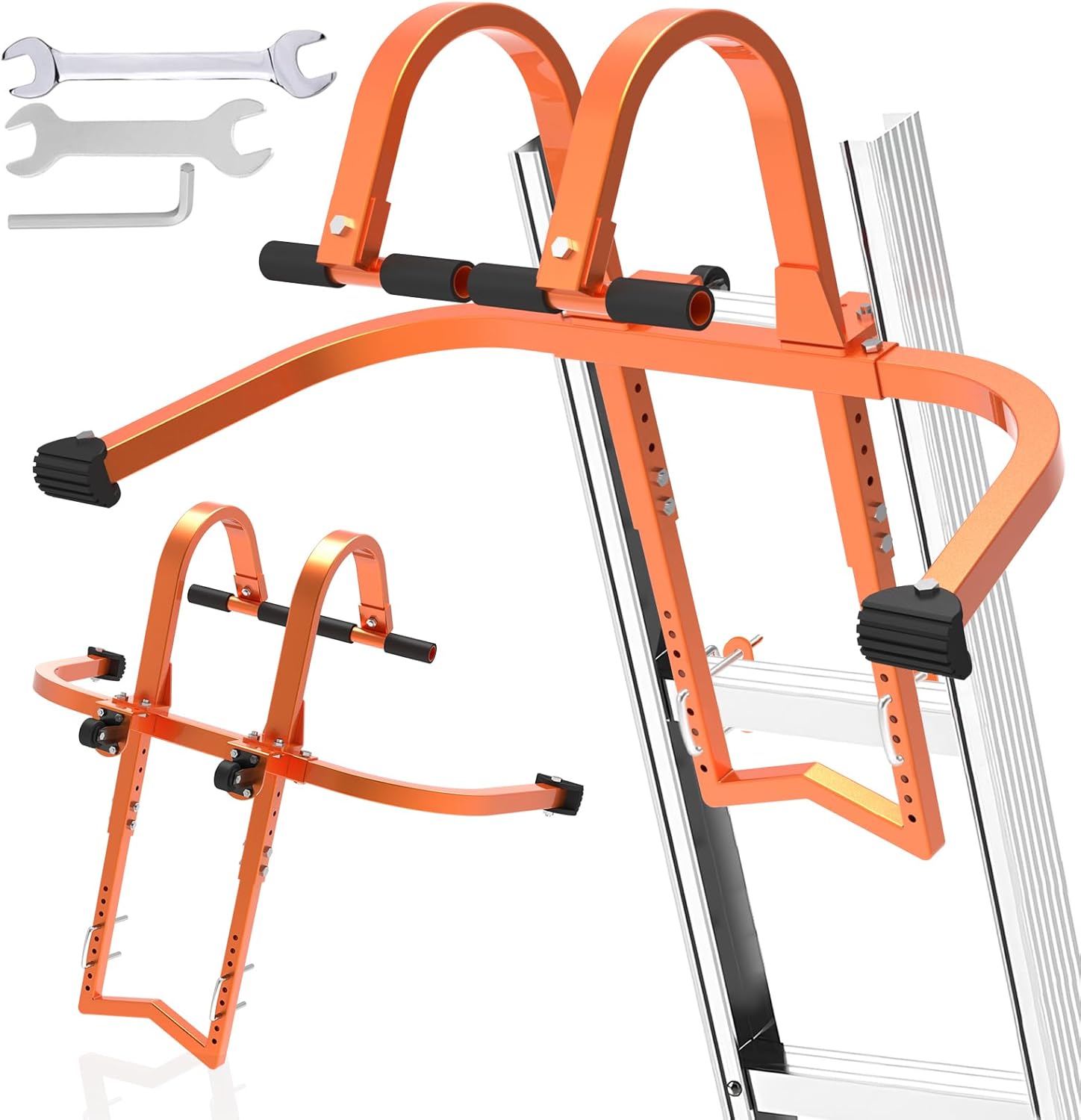
- ladder stabilizer
- ladder levelers
- ladder safety hooks
- fall protection harness (when working at heights)
- hard hat (especially around overhead hazards)
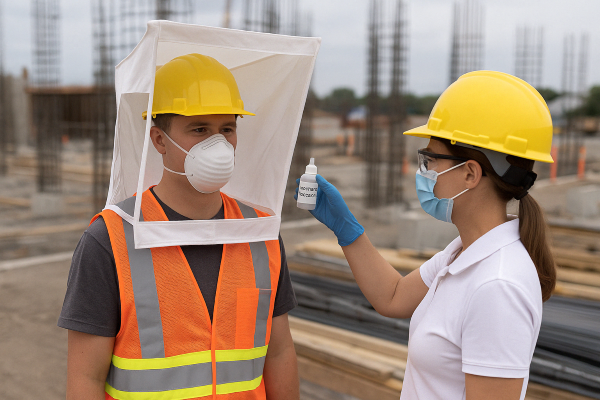
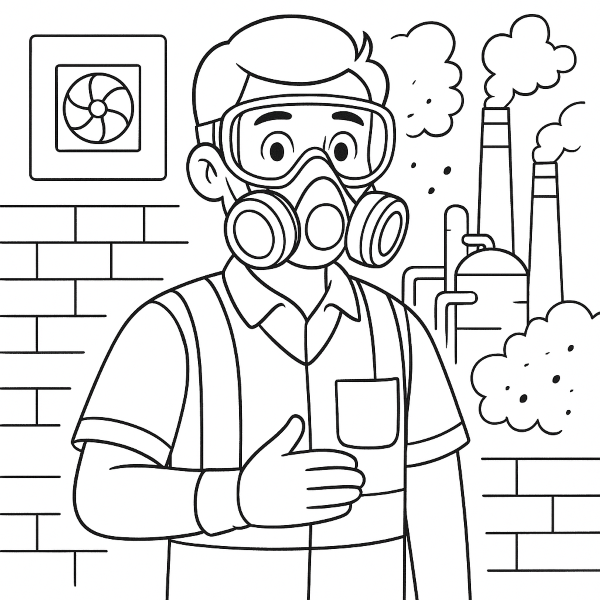
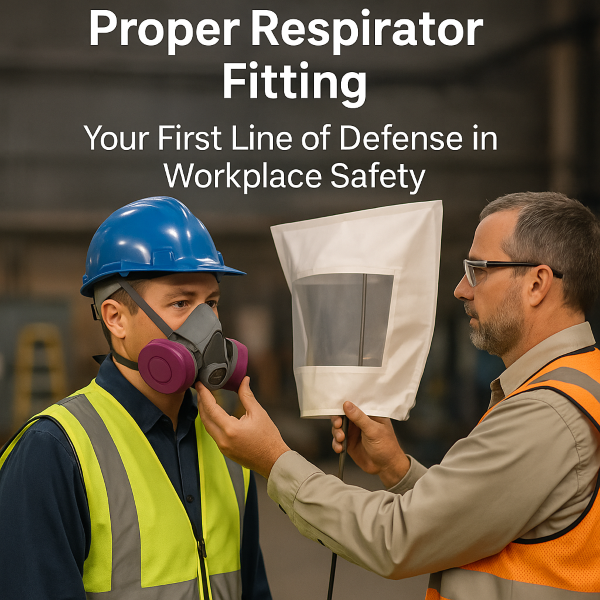
If your workplace also deals with dust, fumes, or chemical exposure, respiratory protection matters just as much as fall protection.
Tip: If you’re adding affiliate links, this is the perfect section to place them.
Final Thoughts: Ladder Falls Are Preventable
Ladders are everywhere — which makes them feel “normal.”
But falls are one of the most common workplace injuries, and most ladder falls are preventable.
If you remember one thing from this post, make it this:
Always keep 3 points of contact.
No shortcuts. No exceptions.
Because the moment you treat a ladder like it’s safe without respect… that’s when it becomes dangerous.
Frequently Asked Questions
What is the #1 ladder safety mistake?
The #1 ladder safety mistake is not maintaining 3 points of contact while climbing or working.
What does OSHA say about ladder safety?
OSHA ladder safety guidelines include proper ladder inspection, correct ladder setup, safe climbing methods (3 points of contact), and fall protection when needed.
How do you prevent falling off a ladder?
Use 3 points of contact, avoid overreaching, reposition the ladder often, secure the ladder, and use appropriate PPE and fall protection equipment.