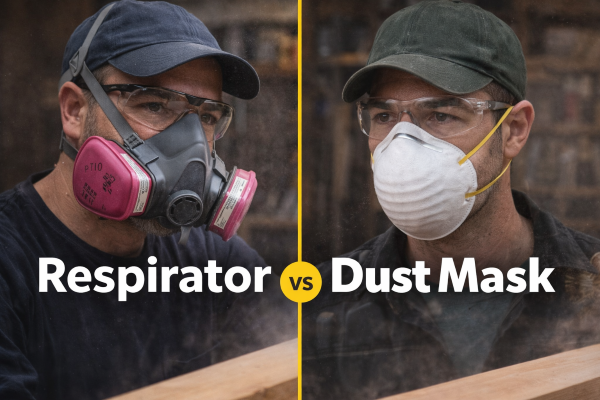
Wearing a respirator is not enough on its own. If it does not seal properly to the face, contaminated air can leak in and be inhaled.
Respirator fit testing exists to prevent that risk before exposure happens. It confirms that a respirator actually fits the person wearing it and provides the level of protection it was designed for.
Without fit testing, even high-quality respiratory equipment can fail.
For a broader overview of workplace respiratory protection, see Respiratory & Air Safety in the Workplace: Risks, Protection, and Best Practices.
What Is Respirator Fit Testing?
Respirator fit testing is used to verify that a tight-fitting respirator forms a proper seal against the wearer’s face. This applies to disposable respirators, half-masks, and full-face respirators.
Loose-fitting hoods and helmets do not require fit testing because they do not depend on a facial seal. Fit testing answers one simple question: Does this specific respirator fit this specific person well enough to protect them?
Why Fit Testing Is Required (OSHA Compliance)
A poorly fitting respirator allows contaminated air to bypass the filter. This exposes workers to dust, fumes, and gases even when the mask appears to be worn correctly. Beyond safety, fit testing is a mandatory requirement under OSHA 29 CFR 1910.134.
Fit testing helps prevent:
- Exposure caused by microscopic leaks around the mask seal.
- A false sense of security that leads to risky behavior in hazard zones.
- Long-term respiratory illnesses and legal non-compliance.
Every face is different. A respirator that fits one worker may not fit another. Even the same worker may need re-testing after weight changes, dental work, or switching brands. If you need a refresher on mask categories, see Types of Respirators and When to Use Them.
Types of Fit Testing: Qualitative vs. Quantitative
1. Qualitative Fit Testing (QLFT)
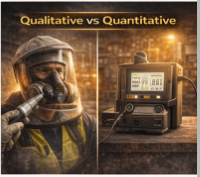
Qualitative fit testing is a “pass/fail” method that relies on the wearer’s senses to detect leaks. During the test, the wearer is exposed to a test agent (like Saccharin or Bitrex). If the wearer can taste or smell the agent while performing specific movements, the seal is insufficient.
This is the most common method for testing disposable N95 masks and half-mask respirators.
2. Quantitative Fit Testing (QNFT)
Quantitative testing uses specialized instruments to measure the actual amount of leakage into the respirator. It does not rely on human senses; instead, it provides a numerical “fit factor.” This method is required for full-face respirators used in high-hazard environments.
What Is a Fit Test Kit?
A qualitative fit test kit contains the essential tools needed to perform OSHA-compliant testing in-house. Most kits include:
- Sensitivity & Test Solutions: Usually Saccharin (sweet) or Bitrex (bitter).
- A Test Hood: To isolate the air around the wearer’s head.
- Nebulizers: To create a fine mist of the test agent.
- Documentation: Forms to record the pass/fail results for safety records.
When Must Fit Testing Be Done?
Fit testing is not a one-time task. To remain compliant and safe, it must be performed:
- Annually: OSHA requires a re-test every 12 months.
- Initial Use: Before a worker wears a specific model for the first time.
- Equipment Changes: If you switch brands or mask sizes.
- Physical Changes: After significant weight loss/gain, scarring, or major dental work.
Common Fit Testing Mistakes to Avoid
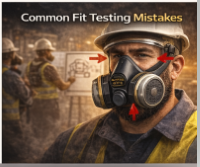
- Facial Hair: Even minor stubble where the mask seals against the skin can cause a failure. Workers must be clean-shaven during testing and use.
- Comfort vs. Fit: A respirator that feels “tight” or “comfortable” does not necessarily have a proper seal. Only a fit test can confirm protection.
- Wrong Size: Many workers default to a “Large” or “Medium,” but facial structure varies wildly; testing often reveals a different size is needed.
- Poor Record Keeping: Failing to document the specific mask size and model passed during the test is a common audit failure.
To learn more about the technical side of protection, see Respirator Filters Explained.
Final Thoughts
A respirator that does not fit is just a false sense of security. Fit testing removes the guesswork, ensures OSHA compliance, and most importantly, protects the health of your team.
Recommended Respirator Fit Test Kits

3M Health Care FT-30 Qualitative Respiratory Fit Test Apparatus, Bitter Solution by 3M Health Care
Meets the performance criteria for fit testing respirators under the current OSHA Standard for Respirator Protection: 29 CFR 1910.134, Appendix A Kit includes: hood, collar, 2 nebulizers, bitter tasting sensitivity solution, bitter tasting fit test solution and laminated user instructions
* Some links in these cards may be affiliate links. I may earn a commission at no extra cost to you. Prices may vary.