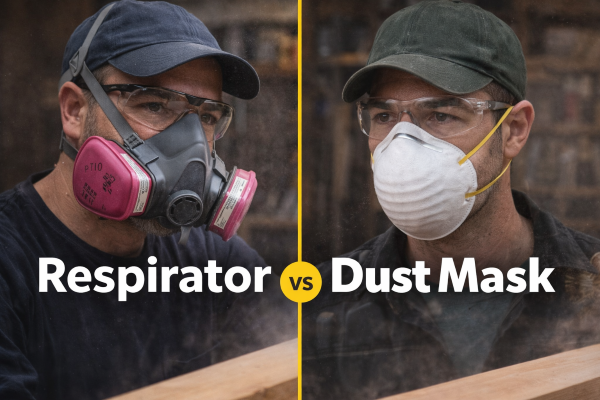
Choosing a respirator is only half of the equation. The filter or cartridge attached to that respirator is what actually determines your level of protection. Using the wrong filter can leave workers exposed to toxic fumes or microscopic dust, even if the mask fits perfectly.
This guide breaks down the primary types of respirator filters, their NIOSH color-coding, and how to implement a safe change-out schedule for your workplace.
Why Respirator Filters Matter

Respirator filters are engineered to neutralize specific atmospheric hazards. Some mechanically trap solid particles like silica dust, while others use activated carbon to chemically absorb vapors. Understanding how these fit into your Respiratory & Air Safety program is vital for OSHA compliance.
1. Particulate Filters (N, R, and P Series)
Particulate filters trap solids and mists. Under NIOSH standards, they are categorized by their resistance to oil:
- N-Series (Not resistant to oil): Best for general construction and woodworking dust.
- R-Series (Resistant to oil): Can be used in oily environments for a single shift.
- P-Series (Oil-Proof): The highest level of protection (e.g., P100), suitable for all environments including those with oil-based aerosols.
Common Uses: Grinding, sanding, sweeping, and protection against lead or asbestos (P100 required).
2. Gas and Vapor Cartridges (Color-Coded)
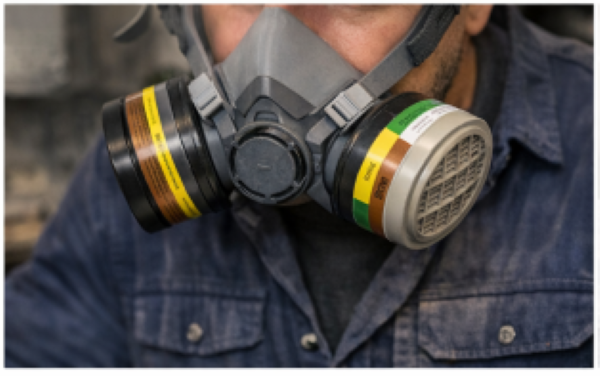
Chemical cartridges don’t just “filter” air; they use sorbent materials to soak up gases. To prevent errors, NIOSH requires these to be color-coded:
| Label Color | Protects Against |
|---|---|
| Black | Organic Vapors (Solvents, thinners, fuels) |
| White | Acid Gases (Chlorine, hydrogen chloride) |
| Green | Ammonia or Methylamine |
| Yellow | Organic Vapors + Acid Gases |
| Olive/Multi | Multi-Gas (Protects against a broad range of chemicals) |
3. Combination Filters
Combination cartridges feature a particulate filter stacked on top of a chemical cartridge (usually identified by a Magenta stripe on a Black or Yellow label). These are essential for painting operations where both paint mist (particulate) and solvent vapors (gas) are present.
Filter Change-Out Schedules: When to Swap

Waiting until you can “smell the chemical” is dangerous—that means breakthrough has already occurred. Follow these replacement rules:
- Particulate Filters: Replace when breathing becomes difficult (clogged) or if the filter is physically damaged/soiled.
- Chemical Cartridges: Follow a calculated change-out schedule based on exposure levels. Most manufacturers provide online tools to calculate service life.
- The “End-of-Service” Rule: If the cartridge has an End-of-Service Life Indicator (ESLI) that changes color, replace it immediately.
When Filters Are Not Enough
Air-purifying respirators (filters) only work when there is enough oxygen to breathe. If the environment is “Immediately Dangerous to Life or Health” (IDLH), or oxygen levels are below 19.5%, you must switch to an atmosphere-supplying respirator and use gas monitors to ensure safety.
Final Thoughts
Matching the right filter to the hazard is the backbone of respiratory safety. Always verify that your cartridges are compatible with your mask brand and that your team is up-to-date on respirator fit testing to ensure a tight seal.
Recommended Respirator Filters and Cartridges

North Organic Vapor P100 Respirator Cartridge (2/pk), (7581P100L)
LOW PROFILE: Lower profile so cartridges don’t intrude into the work zone, see everything you need to see, even when doing close up detail work.
* Some links in these cards may be affiliate links. I may earn a commission at no extra cost to you. Prices may vary.